Gavin Rain
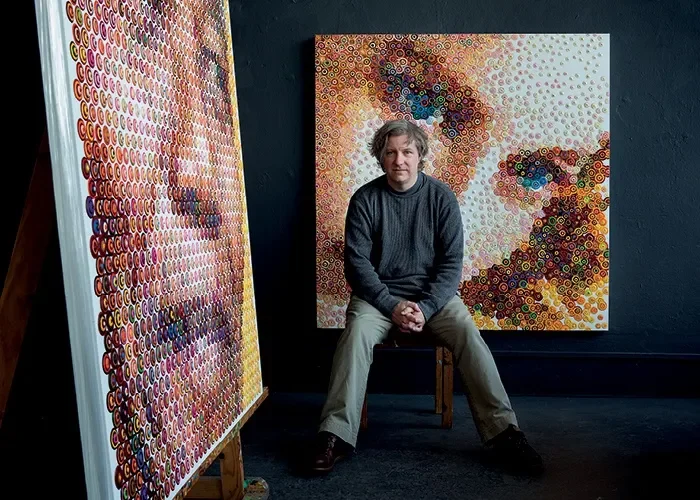
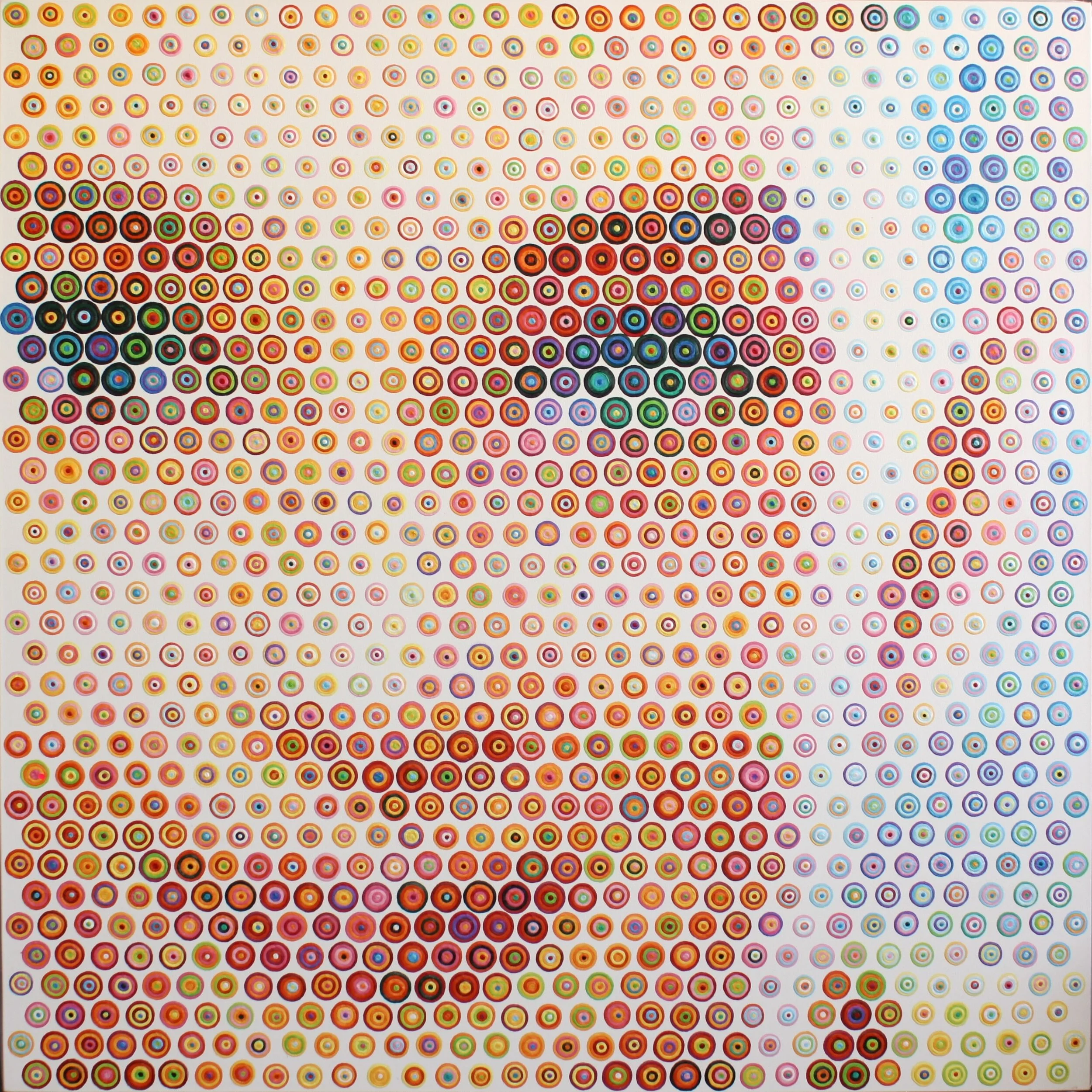
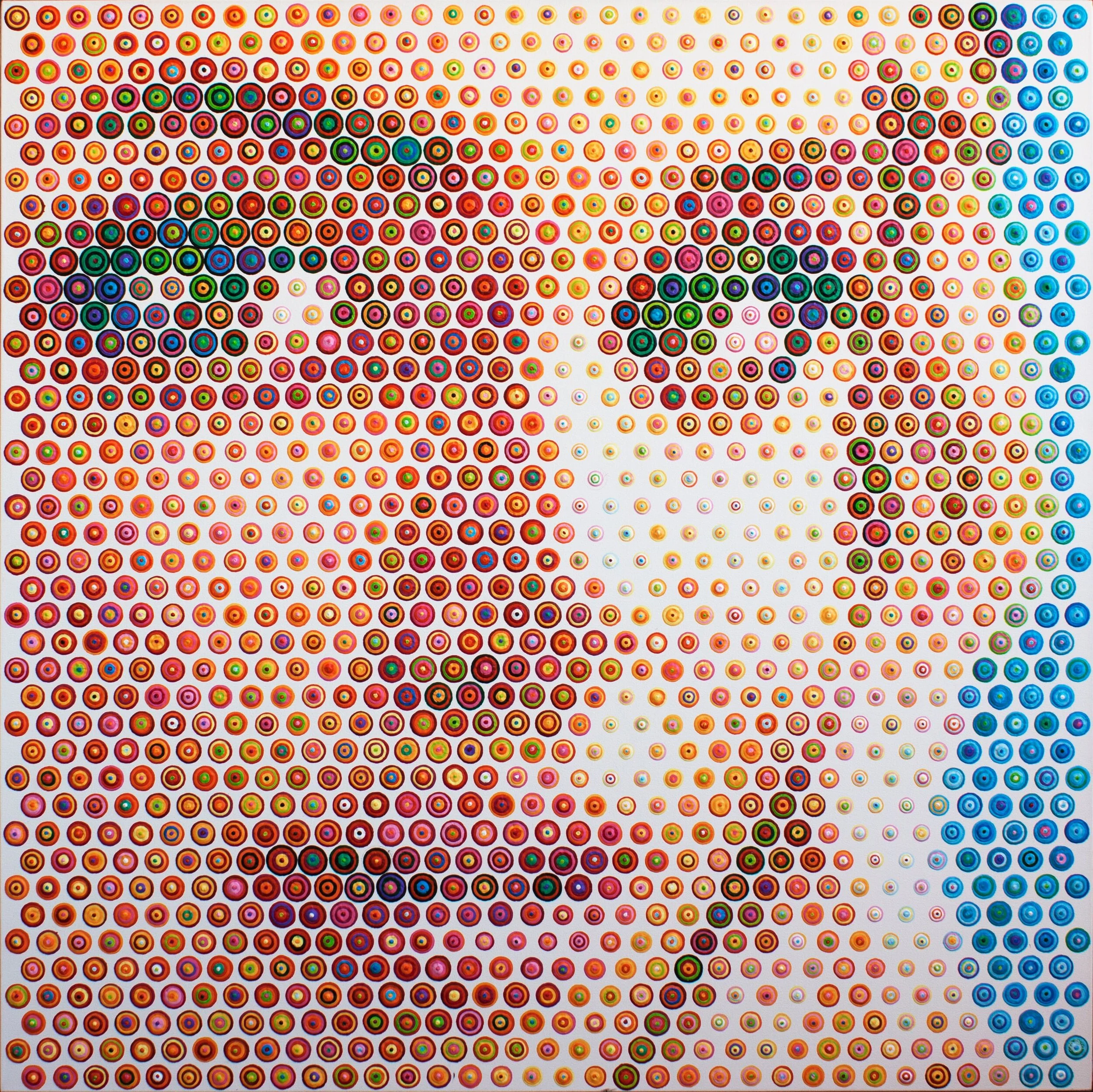
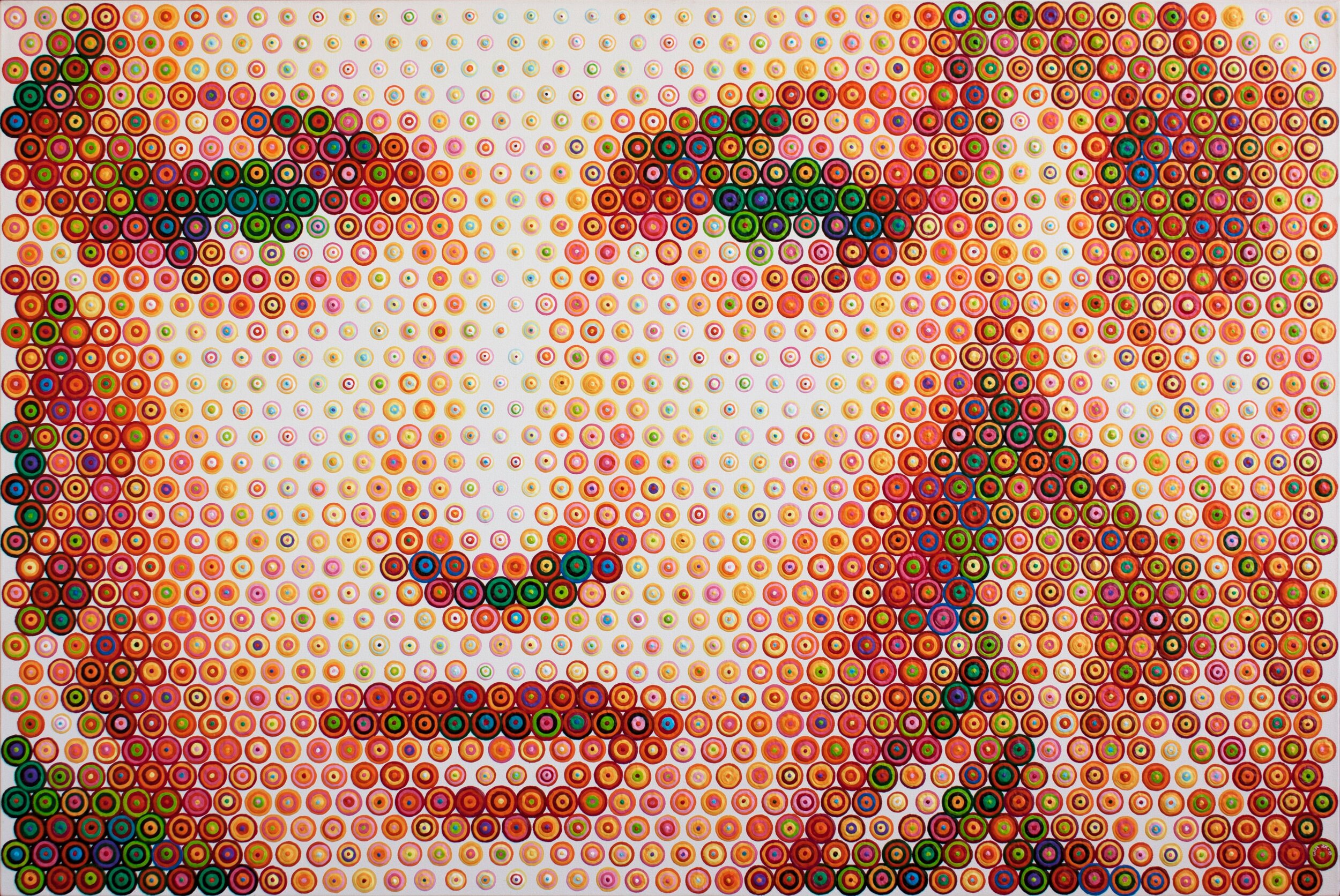
Gavin Rain (b. 1971) is a South African artist known for his distinctive approach to neo-pointillism, or pixelism, in which thousands of individually painted dots resolve into recognizable images only when viewed from a distance. Born in Cape Town, Rain developed this technique in the early 2000s while exploring ideas surrounding visual perception and neuroscience. Up close, his paintings appear as intricate fields of concentric color and abstract pattern; as the viewer moves away, portraits and figurative images gradually emerge, making physical distance and movement essential parts of the viewing experience. Rain refers to this perceptual shift as “hidden in plain sight,” using the relationship between abstraction and recognition to question how images are constructed and understood. His process draws parallels to the pixels of digital screens, but each painted mark is carefully selected and applied by hand from a highly developed system of color relationships. Portraiture is central to his practice, with subjects ranging from cultural icons to political and historical figures, allowing familiar faces to become vehicles for broader investigations into perception, identity, and representation. Rain has exhibited internationally and received significant public commissions, including a series of portraits created in connection with the 2010 FIFA World Cup in South Africa. His work was also presented during the 54th Venice Biennale in 2011, where he exhibited a portrait of Nobel Peace Prize laureate Aung San Suu Kyi, and again in Venice in 2013 as part of the Bangladesh Pavilion. Through the combination of technical precision, optical illusion, and viewer participation, Rain has developed a highly recognizable visual language that moves continuously between abstraction and figuration.